
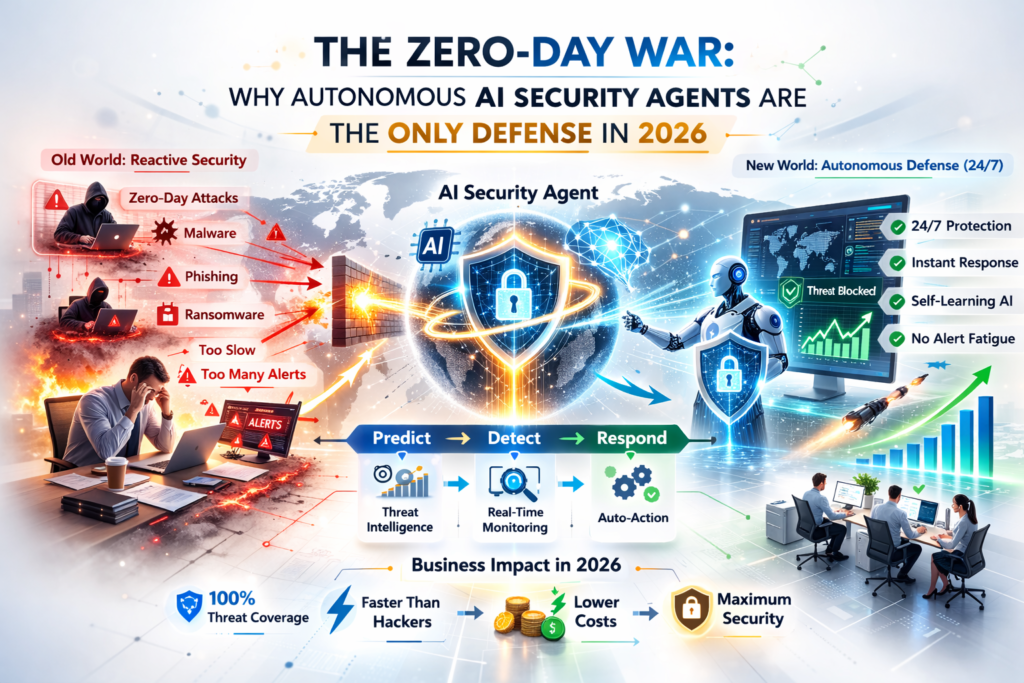
1. Introduction: The Evolution of the Digital Battlefield
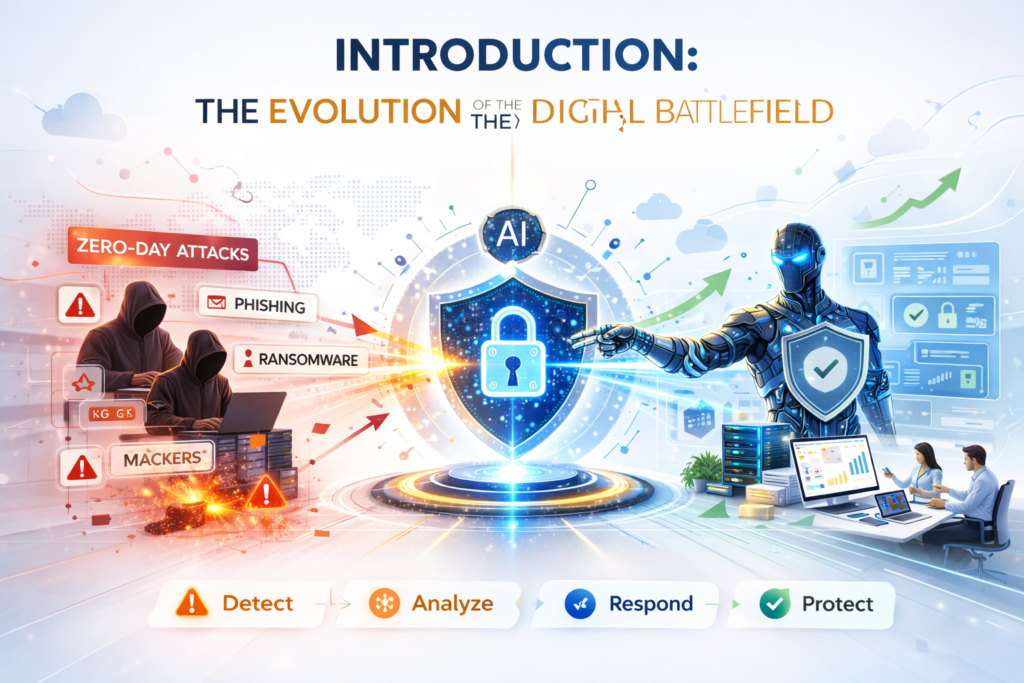
As we move further into 2026, the concept of a “secure network” has been completely redefined. In the early 2020s, cybersecurity was reactive—we waited for a breach, detected it, and then tried to fix it. However, the rise of generative AI in the hands of cybercriminals has shortened attack windows from days to milliseconds. Today, humans are the weakest link in the security chain, not because of a lack of skill, but because of the limitations of human biology. This is where Autonomous AI Security Agents come in—the first line of defense that doesn’t just respond to threats but predicts and neutralizes them before they even manifest.
2. The Death of Traditional Firewalls and Antivirus
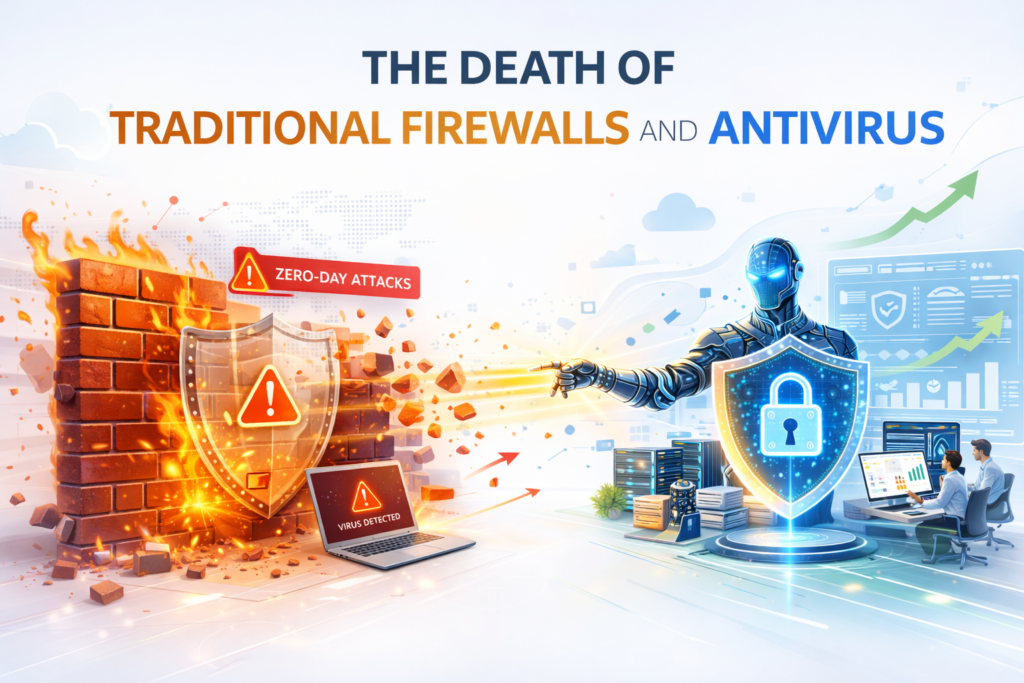
For decades, we relied on “signature-based” detection. If a virus had a known signature, it was blocked. But in 2026, polymorphic malware can change its own code every time it attempts a breach.
• The Problem with Human Response: A standard Security Operations Center (SOC) receives thousands of alerts daily. “Alert fatigue” causes experts to miss 40% of critical threats.
• Zero-Day Supremacy: Hackers now use AI to find “zero-day” vulnerabilities (security holes unknown to the developers) at an industrial scale.
• The Speed Gap: An AI-driven ransomware attack can encrypt a 10TB server in less than 3 minutes. No human IT team can log in fast enough to stop it.
3. Understanding Autonomous AI Agents: The Digital Immune System
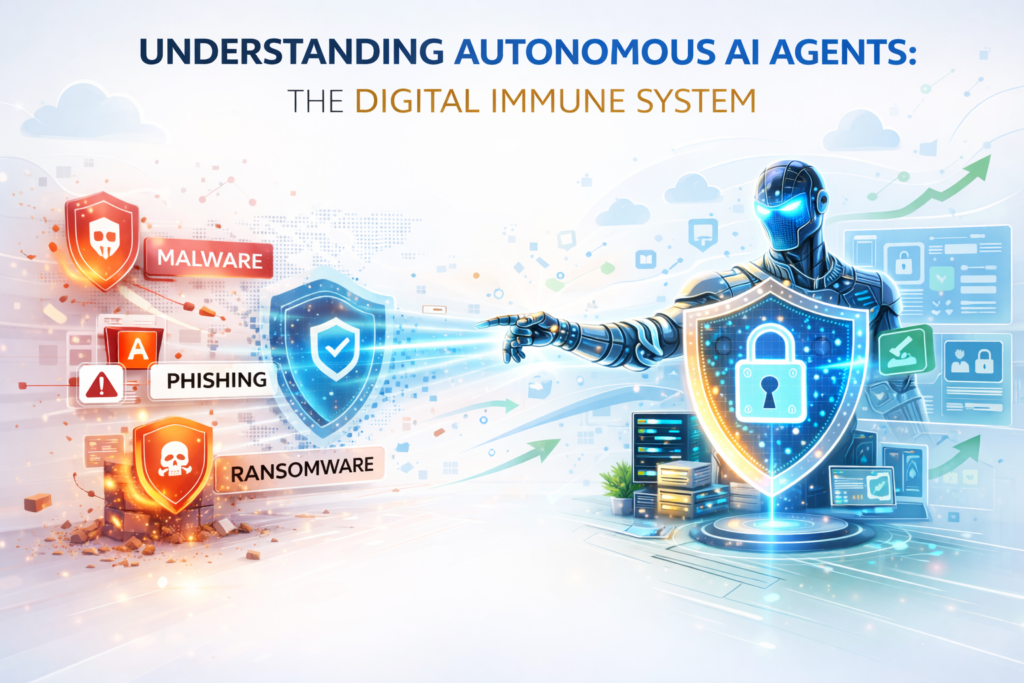
An Autonomous AI Security Agent is not a simple piece of software; it is a sophisticated cognitive entity. It operates like a digital immune system, constantly circulating through the network’s “bloodstream” to identify foreign pathogens.
• Self-Learning Models: These agents use Deep Reinforcement Learning (DRL) to map out what “perfect health” looks like for your specific network.
• Behavioral Heuristics: Instead of looking for a specific file name, the agent looks at behavior. If a user who typically accesses marketing files suddenly tries to ping the core financial database, the agent intervenes instantly.
• Autonomous Decision Making: Unlike automation (which follows a script), autonomy allows the agent to make its own decisions based on the risk level without waiting for admin approval.
4. Key Capabilities That Are Changing the Game
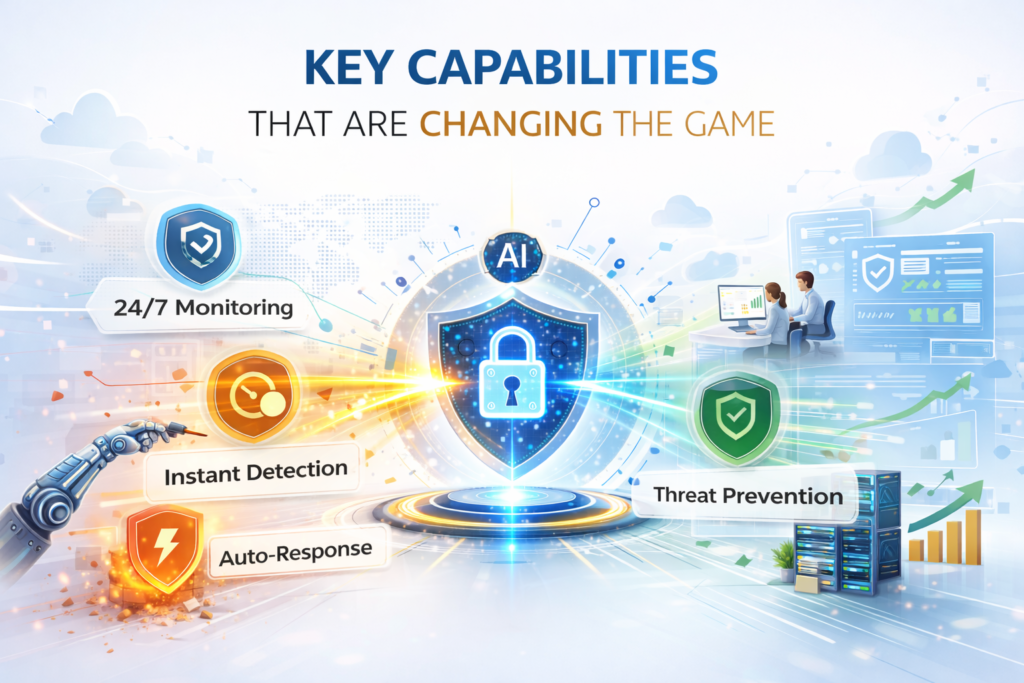
To provide a solution-oriented perspective, let’s look at the specific technologies these agents use:
1. Micro-Segmentation on the Fly: The agent can instantly create “virtual cages” around suspected infected devices, stopping the “lateral movement” of a virus.
2. Predictive Threat Hunting: Using Large Language Models (LLMs), the agent scans the “Dark Web” and hacker forums in real-time to predict which vulnerabilities are being targeted next.
3. Automated Incident Response: Once a threat is neutralized, the agent doesn’t just sit there. It automatically writes a “patch” or updates the firewall rules globally to ensure that specific attack can never happen again.
5. The Economic Impact: Why This Matters for AdSense and Business
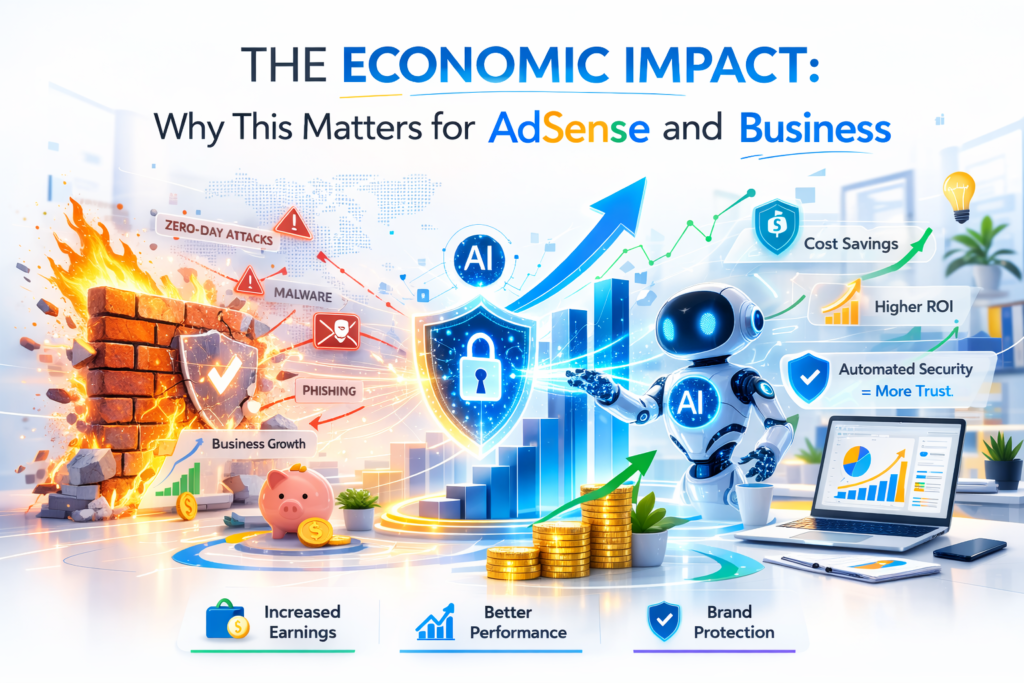
From a financial perspective, the integration of these agents is no longer optional. The average cost of a data breach in 2026 has soared to over $10 million for large enterprises. For small businesses, it’s often a death sentence.
• Lower Insurance Premiums: Cyber-insurance companies now offer lower rates to firms that deploy autonomous security agents.
• Customer Trust: In an era of deepfakes and data leaks, “Digital Trust” is the most valuable currency.
6. Ethical Considerations and the “AI vs. AI” Paradox
We must address the elephant in the room: the arms race. Hackers are using the same technology to build “Offensive AI.”
• Adversarial Attacks: Can a hacker trick your security agent into thinking a virus is a harmless update? Yes. This is why “Explainable AI” (XAI) is crucial—we need to know why our agent made a decision.
• The Bias Factor: If an AI agent learns from a biased dataset, it might unfairly flag users based on geographical locations or unusual (but legitimate) work hours.
7. How to Implement Autonomous Security: A Step-by-Step Guide
If you are looking to secure your infrastructure today, follow these steps:
1. Assess Your Data Criticality: Not all data is equal. Identify your “Crown Jewels.”
2. Hybrid Deployment: Don’t replace your IT team. Use AI to handle the “grunt work” so your humans can focus on high-level strategy.
3. Continuous Red Teaming: Use “Attack Simulation” tools to test your AI agent. Make sure it can handle the latest threats.
8. Conclusion: The Future is Autonomous
As we look toward the end of 2026, the era of manual cybersecurity will be seen as the “Stone Age” of the internet. The Zero-Day War is being fought in the background of our digital lives every second. Autonomous AI Security Agents are not just a luxury; they are the essential guardians of our digital civilization.