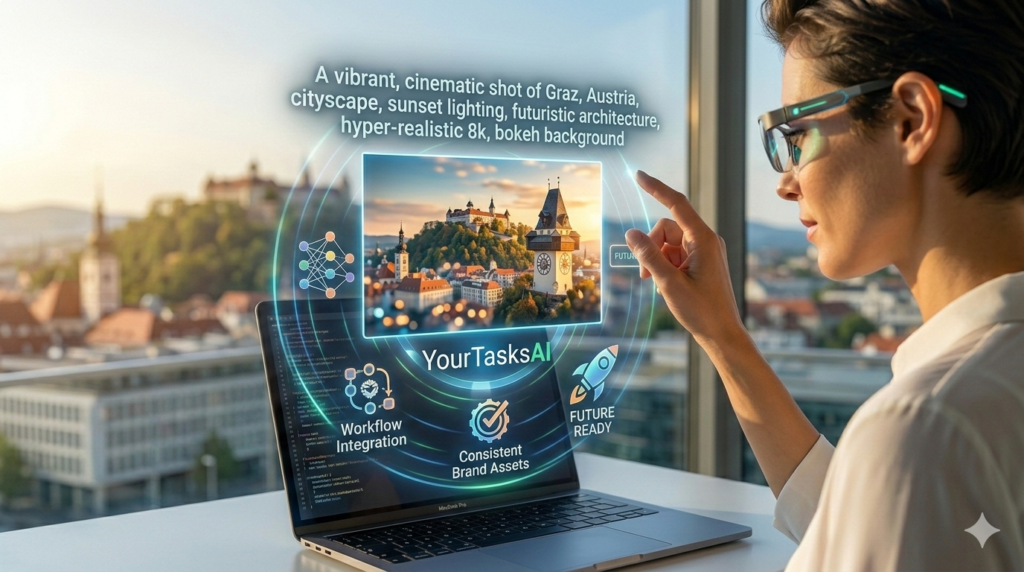
The boundary between human imagination and digital reality has officially dissolved. In 2026, AI art generation is no longer a “fun experiment”—it is a fundamental skill for marketers, designers, and content creators. Whether you are building a brand on YourTasksAI or designing a book cover, understanding how to communicate with AI models is the new literacy.
Why AI Art is Revolutionizing the Industry
Traditional graphic design used to take days of sketching, layering, and rendering. Today, sophisticated models like Midjourney v8 and DALL-E 4 allow us to bypass the technical struggle and move straight to the creative vision. However, the quality of the output depends entirely on the person behind the screen.
1. The Anatomy of a Perfect Prompt
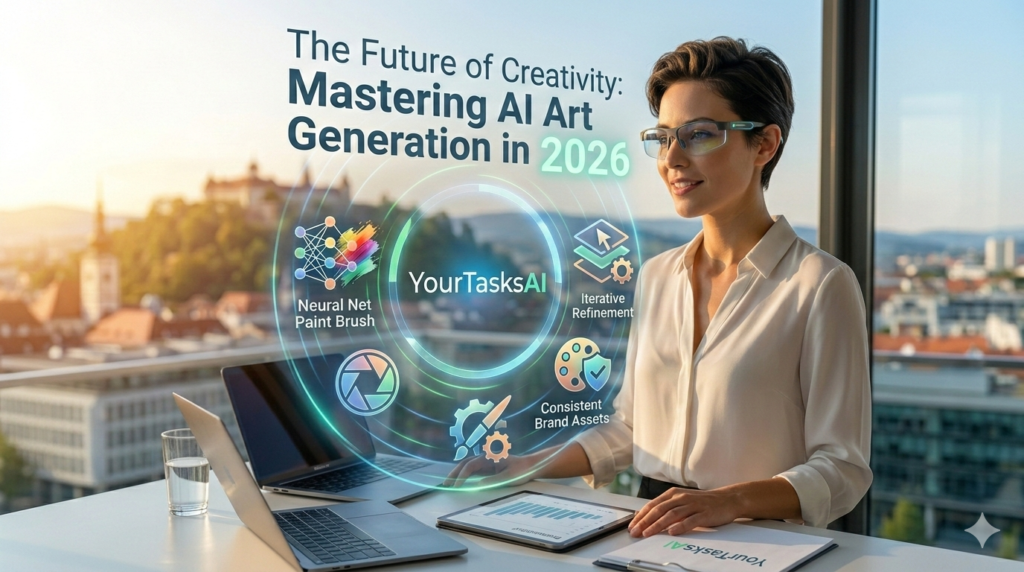
To get professional results, you must move beyond simple descriptions. A “Master Prompt” usually consists of four key elements:
• Subject: What is the main focus? (e.g., A futuristic laboratory)
• Style: Is it hyper-realistic, oil painting, or 3D render?
• Lighting: Is it cinematic, soft glowing, or neon-lit?
• Composition: Is it a close-up, a wide shot, or shot on a 35mm lens?
• Example: “A wide-angle cinematic shot of a high-tech city in 2026, sunset lighting, hyper-realistic 8k, vibrant colors.”
2. Avoiding Common AI Art Mistakes
Many beginners complain that their AI images look “too fake.” To avoid this, you should use negative prompting or specific style weights. At YourTasksAI, we recommend focusing on textures. Adding keywords like “high-grain,” “natural skin texture,” or “weathered metal” can take an image from looking like a cartoon to looking like a photograph.
3. Ethical Use and Copyright in 2026
As a creator, it is vital to stay informed about the legal landscape. Most AI platforms now offer “Commercial Use” licenses, but always ensure you are using models that respect artist copyrights. Transparency is key; letting your audience know that an image was “AI-Enhanced” builds trust and shows that you are at the forefront of technology.
4. Integration into Your Workflow
AI art isn’t just for looking at; it’s for using. You can use these visuals for:
• Website Hero Images: Create unique backgrounds that no one else has.
• Social Media Assets: Generate consistent, high-quality posts in seconds.
• Prototyping: Visualize an app or product idea before spending a dollar on manufacturing.
Conclusion
We are entering a golden age of creativity where the only limit is your vocabulary. By mastering AI art generation, you are not just saving time; you are expanding the horizons of what you can build. Stay tuned to YourTasksAI for our upcoming advanced prompting guides.